Oral Cancer Screening
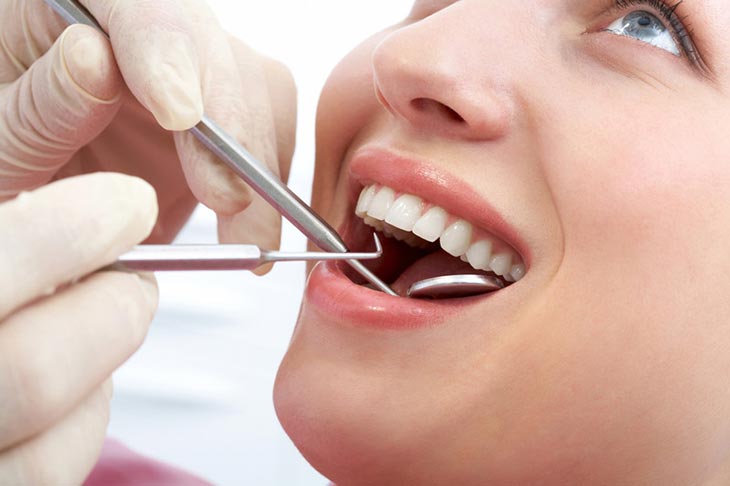
Oral cancer screening is a routine part of your dental examination. Regular dental check-ups,
including an examination of your entire mouth, are essential in the early detection of cancerous and
pre-cancerous conditions.
You may have a very small, but dangerous, oral spot or sore and not be aware of it. Although most
of these are harmless, some are not. Harmful oral spots or sores often look identical to those that
are harmless, but testing can tell them apart. If you have a sore with a likely cause, you may be
asked to return for re-examination.
Dentists often will notice a spot or sore that looks harmless and does not have a clear cause. To
ensure that a spot or sore is not dangerous, your dentist may choose to perform an incision biopsy.
The Importance of Early Detection
Your dentist has recent good news about progress against cancer. It is now easier
than ever to detect oral cancer early, when the opportunity for a cure is great.
Only half of all patients diagnosed with oral cancer survive more than five years.
Your dentist has the skills and tools to ensure that early signs of cancer and pre-cancerous
conditions are identified. You and your dentist can fight and win the battle against
oral cancer. Know the early signs and see your dentist regularly.
You Should Know:
- Oral Cancer often starts as a tiny, unnoticed white or red spot or sore anywhere
in the mouth.
- It can affect any area of the oral cavity including the lips, gum tissue, check
lining, tongue and the hard or soft palate.
- Other signs include
- A sore that bleeds easily or does not heal.
- A color change of the oral tissues.
- A lump, thickening, rough spot, crust or small eroded area.
- Pain, tenderness, or numbness anywhere in the mouth or on the lips.
- Difficulty chewing, swallowing, speaking or moving the jaw or tongue.
- A change in the way the teeth fit together.
- Oral Cancer most often occurs in those who use tobacco in any form.
- Alcohol use combined with smoking greatly increases risk.
- Prolonged exposure to the sun increases the risk of lip cancer.
- Oral cancers can occur in people who do not smoke and have no other known risk factors.
- Oral Cancer is more likely to strike after age 40.
- Studies suggest that a diet high in fruits and vegetables may prevent the development
of potentially cancerous lesions.
Self-awareness is the key to the early detection of oral cancer. Visit your
dentist at once if you notice any abnormal problems or are not sure. Early detection
is the key factor in treatment success! Mouth cancers have a higher proportion of
deaths per number of cases than breast cancer, cervical cancer or skin melanoma.
An increasing number of young people are being affected and 25 percent of the cases
have no associated significant risk factors.
In its very early stages, oral cancers can be almost invisible, making it easy to
ignore. You can improve your chances of survival if the cancer is detected early
and rapidly treated. It is important to have self-awareness and to perform regular,
self-examinations to help in early identification. You should consult your dentist
or doctor immediately if you experience any of the above symptoms.
Back to Procedures